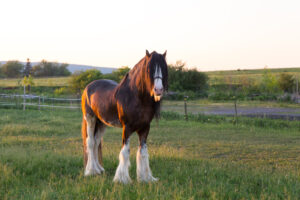



Gentle giants that turned farm work into legend
Few horses command attention quite like the Clydesdale. Towering, powerful, and instantly recognisable with their feathered legs and bold white markings, these horses have long been symbols of strength and reliability. Yet beneath their impressive size lies a temperament so calm and generous that they are often described as the true gentle giants of the horse world.
Where it all began
The Clydesdale takes its name from the River Clyde valley in Scotland, where the breed began to develop in the early 18th century. Farmers in the region needed powerful horses capable of working heavy clay soils and hauling agricultural loads across long distances. By crossing local mares with larger imported stallions, including Flemish and Shire types, they created a horse with both strength and stamina.
Over time, careful breeding refined the type, producing a horse that could pull enormous weight while still maintaining an active, energetic trot. As industrialisation grew, so did the demand for these horses. Clydesdales became the backbone of agriculture, transport, and industry throughout Britain and far beyond, pulling wagons, carts, and brewery drays through busy cities.
Though machinery eventually replaced much of their working role, the breed had already secured its place in history.
What defines a Clydesdale
Clydesdales are among the largest horse breeds in the world, typically standing between 16 and 18 hands high and carrying substantial bone and muscle. Despite their size, they are known for their distinctive elegance, moving with a high stepping action that is surprisingly light and expressive for such a powerful animal.
One of their most recognisable features is the long, silky feathering that flows down their lower legs. Many also display striking white markings on their faces and legs, which adds to their dramatic presence.
Temperament is where the breed truly shines. Clydesdales are widely known for their calm, steady nature. They are generally patient, kind, and willing to work, qualities that made them invaluable partners in demanding physical labour.
More than a working horse
While their roots lie firmly in agriculture and industry, modern Clydesdales have found new roles in the equestrian world. Today they are popular in carriage driving, exhibition teams, and ceremonial displays, where their size and presence make them unforgettable.
Many are also used as riding horses, particularly for leisure riders who enjoy a steady, comfortable mount with a relaxed outlook on life. Clydesdales have also contributed their genetics to other breeds, influencing sport horse development and strengthening draught horse lines around the world.
Who are they suited to
Clydesdales are well-suited to riders and handlers who appreciate a calm and cooperative partner. Their temperament often makes them approachable even for less experienced horse owners, though their size means they are best handled by someone confident and organised around horses.
They thrive in environments where they have space to move and consistent routines. Owners often remark that these horses are as gentle as they are strong, forming steady bonds with the people who care for them.
Strength with a soft side
There is something undeniably special about standing next to a Clydesdale. Their sheer scale is impressive, but it is the quiet kindness behind their eyes that leaves the real impression.
Spend a little time with one, and you will quickly understand why these giants have captured hearts for centuries. They may have been bred to pull the heaviest loads, but more often than not, they carry something far lighter these days, the admiration of everyone lucky enough to meet them.